Unirac NXT Installation Manual: A Comprehensive Guide
Unirac’s NXT system demands meticulous adherence to provided installation guides, ensuring code compliance and optimal performance for solar arrays; review thoroughly!
Installers must consult both the NXT UMOUNT installation manual and supplemental documentation for complete, detailed installation instructions and best practices.
This comprehensive guide, alongside the NXT Horizon Damp;E Guide & U-Builder, facilitates successful project execution, maximizing energy production and longevity.
Unirac NXT represents a significant advancement in solar mounting technology, offering a versatile and robust solution for a wide array of rooftop configurations. This system is engineered for speed and simplicity during installation, while maintaining exceptional structural integrity and long-term durability. The NXT platform is designed to accommodate various module sizes and types, providing installers with flexibility to meet diverse project requirements.
Central to the NXT system is the UMOUNT, a key component that streamlines the mounting process. Understanding the core principles of the NXT system, including its modular design and integrated features, is crucial for a successful installation. Proper planning and adherence to the Unirac NXT Installation Manual are paramount to ensuring a safe, reliable, and high-performing solar array. This system prioritizes ease of use without compromising on quality or performance, making it a preferred choice for solar professionals.
The NXT system’s adaptability extends to various roof types and wind/snow load conditions, offering a scalable solution for both residential and commercial applications.
Understanding the NXT UMOUNT
The NXT UMOUNT is the foundational element of the Unirac NXT system, designed for rapid and secure attachment of solar rails to various roof surfaces. Its innovative design minimizes the number of flashed roof penetrations, enhancing roof integrity and reducing potential leak points. The UMOUNT features integrated mounting points for easy rail alignment and attachment, significantly reducing installation time.
A key feature is the internal rail splice, allowing for continuous rail runs without compromising structural strength. Referencing the Unirac NXT Tips & Tricks video featuring the UMOUNT internal rail splice is highly recommended. Understanding the UMOUNT’s compatibility with different rail profiles and its load-bearing capabilities, as detailed in the installation manual, is essential.
Proper UMOUNT spacing, determined using the NXT Horizon Damp;E Guide & U-Builder, ensures optimal system performance and compliance with local building codes. Careful attention to UMOUNT orientation and secure fastening is critical for a stable and long-lasting solar installation.
Safety Precautions During Installation

Installation of the Unirac NXT system requires strict adherence to safety protocols. Always wear appropriate Personal Protective Equipment (PPE), including safety glasses, gloves, and a hard hat, to protect against falling debris and potential hazards. Working at heights necessitates fall protection equipment, such as harnesses and lifelines, securely anchored to the roof structure.
Exercise extreme caution when handling tools and materials, ensuring they are in good working order. Be mindful of electrical hazards, particularly when making grounding connections, and always de-energize circuits before working near electrical components. Avoid working in inclement weather conditions, such as high winds or rain, which can increase the risk of accidents.
Thoroughly review the Unirac NXT Installation Manual for specific safety warnings and guidelines. Proper training and understanding of the system’s components are crucial for a safe and successful installation. Prioritize safety at every stage of the process to prevent injuries and ensure a reliable solar energy system.
Pre-Installation Planning
Careful pre-planning, including a detailed site assessment and roof compatibility check, is vital for a smooth Unirac NXT system installation; plan meticulously!
Gather all necessary tools and materials, and thoroughly review the Unirac NXT Installation Manual before commencing any work on the project.
Site Assessment and Roof Compatibility
A thorough site assessment is the cornerstone of a successful Unirac NXT installation. Begin by meticulously evaluating the roof’s structural integrity, ensuring it can bear the added weight of the solar array and mounting system. Identify roof type (e.g., asphalt shingle, metal, tile) as different materials require specific attachment methods.
Assess roof pitch and orientation to optimize solar energy capture. Consider potential shading from trees, chimneys, or nearby structures, as this impacts system performance. Verify adequate setback distances from roof edges and obstructions, adhering to local building codes and Unirac guidelines.
Confirm roof compatibility with the NXT system; some roofs may require reinforcement or specialized flashing. Document all findings, including photographs and measurements, to inform the installation plan and ensure a secure, long-lasting system. Proper assessment minimizes risks and maximizes energy production.
Tools and Materials Required
Successful Unirac NXT installations necessitate a comprehensive toolkit and appropriate materials. Essential tools include a calibrated torque wrench (critical for proper fastening), impact driver, socket set, measuring tape, level, chalk line, and safety glasses. A roof penetration tool, appropriate for the roof type, is also vital.
Materials encompass the Unirac NXT mounting components (brackets, rails, clamps), stainless steel fasteners, flashing for roof penetrations, grounding lugs and wire, and appropriate sealant. Ensure all materials meet Unirac’s specifications and are compatible with the roof surface.
Personal Protective Equipment (PPE) – including a harness, hard hat, and work gloves – is non-negotiable. Having a detailed bill of materials, cross-referenced with the installation manual, prevents delays and ensures a complete, safe, and efficient installation process.
Reviewing the Unirac NXT Installation Manual
Thoroughly reviewing the Unirac NXT Installation Manual is paramount before commencing any work. This document details critical procedures, safety protocols, and component-specific instructions. Pay close attention to load tables, wind speed ratings, and roof attachment guidelines specific to your project location.
Understand the system’s grounding requirements, rail attachment methods, and proper torque specifications. Familiarize yourself with the NXT UMOUNT Damp;E Guide & U-Builder for accurate rail spacing and support. Note any code-compliance information and local permitting requirements.
Ignoring the manual can lead to structural failures, void warranties, and compromise system performance. A pre-installation review ensures all installers are aligned on best practices, promoting a safe, efficient, and code-compliant solar array installation.

Installation Process: Step-by-Step
Begin with precise roof attachment marking, referencing Unirac NXT Horizon Damp;E Guide & U-Builder for spans; then, meticulously follow the manual’s sequence.
Secure mounting brackets, align rails accurately, and install mid/end clamps, ensuring proper torque; consistent adherence guarantees a robust, long-lasting solar system.
Mounting Bracket Installation
Unirac NXT mounting bracket installation is a foundational step, demanding precision and adherence to the installation manual’s specifications. Begin by accurately locating and marking the designated roof attachment points, utilizing measurements derived from project plans and the NXT Horizon Damp;E Guide & U-Builder for optimal rail spans.
Ensure the roof surface is clean and prepared to receive the brackets, verifying compatibility with the chosen attachment method. Carefully position each bracket, aligning it with the marked locations and securing it using the appropriate fasteners, as detailed in the manual.
Pay close attention to flashing details to maintain roof integrity and prevent leaks. Proper torque application is critical; consult the manual for specific torque values to avoid over-tightening or under-tightening. Double-check bracket alignment and stability before proceeding to the next phase of installation, guaranteeing a secure and reliable foundation for the entire system.
Rail Attachment and Alignment
Following secure mounting bracket installation, the Unirac NXT rail attachment process requires meticulous attention to detail. Carefully position the rails onto the installed brackets, ensuring proper engagement and alignment with pre-drilled holes. Utilize the appropriate hardware, as specified in the installation manual, and begin fastening the rails to the brackets.
Maintaining consistent rail alignment is paramount for optimal system performance and aesthetic appeal. Employ a level and straight edge to verify that rails are perfectly parallel and plumb. Gradually tighten fasteners in a crosswise pattern to distribute stress evenly and prevent warping.
Refer to the NXT Horizon Damp;E Guide & U-Builder for recommended rail spans and support spacing. Regularly check alignment throughout the process, making adjustments as needed. A properly aligned rail system forms the backbone of a robust and efficient solar array.
Mid-Clamp and End-Clamp Installation
Securely attaching solar modules requires precise mid-clamp and end-clamp installation, as detailed in the Unirac NXT Installation Manual. Begin by positioning the modules onto the rails, ensuring appropriate spacing as dictated by the system design. Then, carefully place the end-clamps at the module’s edges, aligning them with the rail’s designated mounting points.
Next, install the mid-clamps at intervals specified by the module manufacturer and Unirac guidelines. Tighten all clamps gradually and evenly, utilizing a calibrated torque wrench to achieve the recommended torque specifications. Avoid over-tightening, which can damage the modules or clamps.
Verify that each module is firmly secured and properly grounded through the clamping system. Consistent and correct clamping ensures optimal electrical contact and long-term system reliability. Refer to the manual for specific clamp compatibility and installation procedures.

Electrical Considerations
Unirac NXT systems necessitate diligent adherence to electrical codes; proper grounding, wire management, and conduit routing are crucial for safety and performance.
Always consult the installation manual for detailed grounding procedures, ensuring a secure electrical pathway and minimizing potential hazards during operation.
Grounding Procedures for Unirac NXT
Unirac NXT grounding is paramount for safety and system longevity, demanding strict adherence to the installation manual and all applicable electrical codes. Proper grounding mitigates electrical hazards, protects equipment, and ensures optimal system performance. Begin by verifying the grounding electrode system is adequate for the array size.
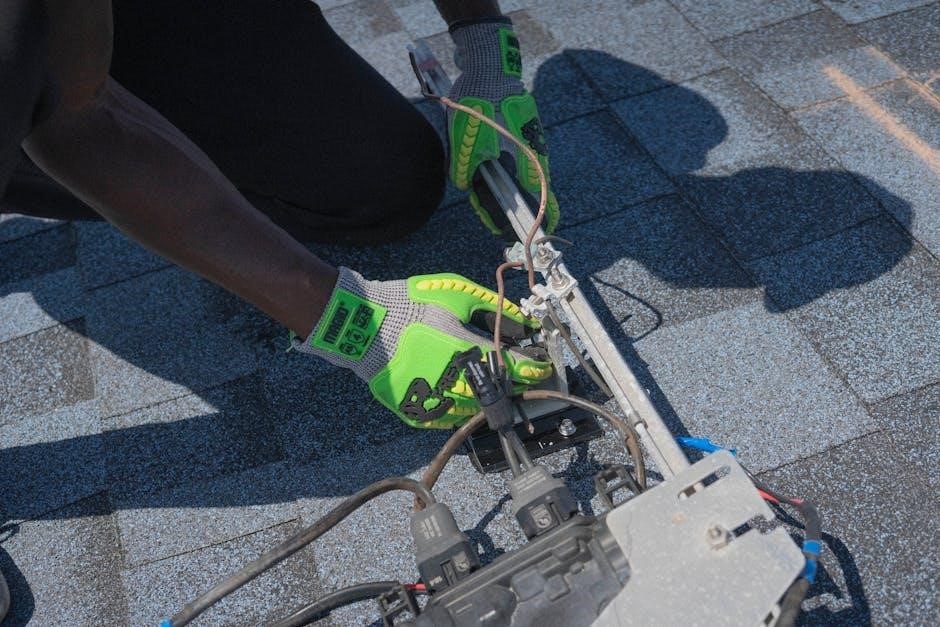
Each Unirac rail section must be securely bonded to the grounding system, utilizing approved grounding lugs and conductors. Ensure continuous electrical conductivity throughout the entire rail network. Pay close attention to rail splices; these require dedicated grounding connections, as highlighted in the NXT UMOUNT Internal Rail Splice documentation.
All mounting components in direct contact with the roof structure must also be bonded. Utilize appropriate grounding straps and fasteners to establish a low-impedance path to ground. Regularly inspect grounding connections for corrosion or looseness, and retorque as needed. Document all grounding connections for future reference and maintenance.
Wire Management Best Practices
Effective wire management is crucial for a neat, safe, and long-lasting Unirac NXT installation. Following best practices minimizes the risk of damage, simplifies troubleshooting, and enhances the system’s overall aesthetic. Securely fasten all wiring to the racking system using approved cable ties or clamps, avoiding sharp bends or excessive tension.
Maintain adequate separation between DC and AC wiring to prevent electromagnetic interference. Route wires along designated pathways, avoiding exposure to direct sunlight or harsh weather conditions. Utilize conduit where necessary to provide additional protection and support, adhering to local electrical codes.
Properly label all wires and connections for easy identification during maintenance or repairs. Avoid overcrowding conduit or junction boxes, ensuring sufficient space for ventilation and future modifications. Regularly inspect wiring for signs of wear or damage, and address any issues promptly. Refer to the Unirac NXT installation manual for specific guidance;
Conduit Routing and Connections
Proper conduit routing and secure connections are paramount for safeguarding electrical wiring within a Unirac NXT system. Always adhere to local electrical codes and the Unirac NXT installation manual’s specific recommendations regarding conduit fill capacity and support intervals.
Route conduit along the racking system, utilizing appropriate clamps and supports to prevent strain on connections. Ensure conduit runs are as direct as possible, minimizing bends to reduce voltage drop and facilitate wire pulling. When making connections, use approved fittings and torque to the manufacturer’s specifications.
Employ weatherproof conduit bodies and seals to protect against moisture ingress, particularly in exposed areas. Ground the conduit system according to established electrical practices, ensuring a continuous grounding path. Regularly inspect conduit for damage or corrosion, addressing any issues promptly to maintain system integrity.

Specific NXT Components
Unirac NXT features specialized parts like the UMOUNT Internal Rail Splice, Horizon Damp;E Guide, and U-Builder, alongside tilt legs—consult the manual!
These components require precise installation following the Unirac NXT installation manual to guarantee structural integrity and optimal system performance.
NXT UMOUNT Internal Rail Splice
Unirac’s NXT UMOUNT Internal Rail Splice is a crucial component for extending rail lengths, enabling adaptability to diverse roof layouts and minimizing waste. Proper installation, detailed in the Unirac NXT Installation Manual, is paramount for maintaining structural integrity and ensuring system longevity.
The splice facilitates a secure, load-bearing connection between rail sections, effectively creating a continuous pathway for module mounting. It’s vital to adhere strictly to the specified torque requirements during fastening, preventing loosening due to thermal expansion and contraction or wind loads. Incorrect torque can compromise the entire system’s stability.
Before commencing, verify compatibility with the rail profile and ensure the splice is correctly aligned; The manual provides clear diagrams illustrating proper positioning and fastening sequences. Regularly inspect splices during post-installation checks, confirming all connections remain tight and secure. Utilizing the correct tools, as outlined in the manual, is also essential for a successful outcome.
NXT Horizon Damp;E Guide & U-Builder
The Unirac NXT Horizon Damp;E Guide & U-Builder is an invaluable resource for optimizing rail spans and ensuring code compliance. This tool, referenced within the broader Unirac NXT Installation Manual, allows installers to accurately determine appropriate rail spacing based on site-specific conditions like wind and snow loads.
It’s crucial to utilize the U-Builder to generate a customized layout plan, factoring in roof dimensions, module specifications, and local building codes. The Damp;E Guide provides detailed information on deflection calculations, ensuring the system meets structural requirements and minimizes potential stress on the roof.
Properly interpreting the U-Builder’s output is essential; it dictates the number and placement of attachment points. Always cross-reference the generated plan with the installation manual for detailed fastening instructions. Ignoring these guidelines can lead to system failure or code violations, so diligent application is key.
Tilt Leg Installation Guide
The Unirac NXT system’s Tilt Leg Installation Guide provides a focused, step-by-step approach to achieving the desired array angle. This guide, a vital component of the overall Unirac NXT Installation Manual, details proper leg attachment to the mounting rails and roof structure, emphasizing secure fastening techniques.
Installers must carefully follow torque specifications outlined in the guide to prevent over-tightening or loosening, which could compromise system integrity. The guide illustrates correct alignment procedures, ensuring consistent tilt across the entire array for optimal solar energy capture.
Pay close attention to the recommended leg spacing and the use of appropriate hardware for the specific roof type. A dedicated installer’s video is available, offering visual clarification of the process. Always verify the final tilt angle with a digital level before proceeding to subsequent installation steps.

Troubleshooting Common Issues
Unirac NXT installations may encounter rail alignment, grounding, or roof penetration challenges; consult the manual for solutions and best practices!
Addressing these promptly ensures system stability, longevity, and optimal performance, adhering to safety standards and code requirements throughout the process.
Addressing Rail Alignment Problems
Rail alignment is crucial for optimal Unirac NXT system performance and longevity; deviations can lead to stress, reduced efficiency, and potential failures.
Begin by re-verifying the initial layout, ensuring adherence to the NXT UMOUNT installation manual’s specifications regarding rail spans and attachment point locations.
Loose or improperly torqued mounting brackets are frequent culprits; systematically check and tighten all connections to the manufacturer’s recommended torque values.
If rails still exhibit misalignment, carefully inspect the roof surface for inconsistencies or unevenness that may be contributing to the issue; shimming may be necessary.
Utilize a laser level or straight edge to precisely measure and correct any deviations, prioritizing a consistently level and parallel rail configuration throughout the array.
Remember to document all adjustments made and re-inspect the system post-correction to confirm stability and proper alignment before proceeding with further installation steps.
Resolving Grounding Issues
Proper grounding is paramount for safety and system performance with Unirac NXT; inadequate grounding can create electrical hazards and compromise equipment.
First, meticulously review the Unirac NXT installation manual’s grounding procedures, ensuring all components are correctly bonded according to local electrical codes.
Verify the integrity of all grounding lugs and connections, confirming they are clean, tight, and free from corrosion; use a torque wrench to meet specifications.
Inspect the grounding conductor’s path, ensuring it’s continuous and unobstructed, with minimal impedance between the array, mounting structure, and ground point.
If resistance readings are high, re-examine connections, check for damaged conductors, and consider adding supplemental grounding paths to improve conductivity.
Always test the grounding system with a calibrated meter to confirm its effectiveness before energizing the array, prioritizing safety and code compliance.
Dealing with Roof Penetration Concerns
Roof penetrations are critical aspects of Unirac NXT installations, demanding careful attention to maintain roof integrity and prevent leaks; follow the installation manual precisely.
Prioritize using the manufacturer’s recommended flashing kits, ensuring they are compatible with your specific roof type and properly sealed around each penetration point.
Inspect the roof deck for any existing damage before installation, addressing any weaknesses or deterioration to provide a solid base for the mounting system.
Apply sealant generously around all flashing bases and fastener heads, creating a watertight barrier against moisture intrusion; use a high-quality, UV-resistant sealant.
Regularly inspect penetrations during and after installation, looking for signs of leaks or sealant failure, and address any issues promptly to prevent further damage.
Consult with a roofing professional if you encounter complex roof structures or have concerns about maintaining the roof’s warranty; prioritize long-term protection.
Post-Installation Checks

Unirac NXT systems require thorough post-installation verification, including torque checks on all connections and a comprehensive stability inspection for safety.
Meticulous documentation of the entire process, including torque values and inspection results, is crucial for warranty compliance and future maintenance.
Torque Verification of All Connections
Crucially, post-installation torque verification is paramount for the long-term integrity and performance of your Unirac NXT system. Failure to properly torque all connections can lead to loosening over time due to thermal cycling, wind loads, and vibration, potentially compromising the entire structure.
Refer to the Unirac NXT Installation Manual for specific torque specifications for each fastener type – this information is non-negotiable. Utilize a calibrated torque wrench to ensure accuracy; do not rely on “feel” or estimations. Systematically check every bolt, nut, and screw, documenting each reading.
Pay particular attention to rail connections, mounting bracket attachments, and grounding lugs. Any discrepancies from the specified torque values must be immediately addressed and re-verified after correction. Maintaining proper torque prevents premature wear, reduces the risk of component failure, and safeguards the overall system’s structural stability, ensuring decades of reliable operation.
System Inspection for Stability
A thorough system inspection for stability is a critical final step in the Unirac NXT installation process. Visually assess the entire array, looking for any signs of misalignment, uneven settling, or compromised components. Carefully examine the roof penetrations, ensuring watertight seals are intact and flashing is correctly installed.
Gently apply pressure to various points along the rails and mounting brackets to check for any unwanted movement or flex. Verify that all components are securely fastened and that there are no loose connections. Confirm that the system is uniformly supported and that weight is evenly distributed across the roof structure.
Document any observed issues, no matter how minor, and address them promptly. A stable and secure installation is essential for maximizing energy production and protecting your investment. Refer to the Unirac NXT Installation Manual for detailed inspection guidelines and best practices.
Documentation and Record Keeping
Meticulous documentation and record keeping are paramount following a Unirac NXT system installation. Maintain a comprehensive file containing the Unirac NXT Installation Manual, site assessment reports, and all relevant permits and approvals. Detailed records of torque verification for all connections are essential, demonstrating adherence to manufacturer specifications.
Include photographs documenting the installation process, particularly roof penetrations, flashing details, and grounding connections. Keep a log of any deviations from the standard installation procedure, along with explanations and justifications. Retain copies of all electrical inspection reports and utility interconnection agreements.
This documentation serves as a valuable resource for future maintenance, troubleshooting, and potential warranty claims. Proper record keeping ensures accountability and demonstrates a commitment to quality installation practices, as outlined in the Unirac guidelines.